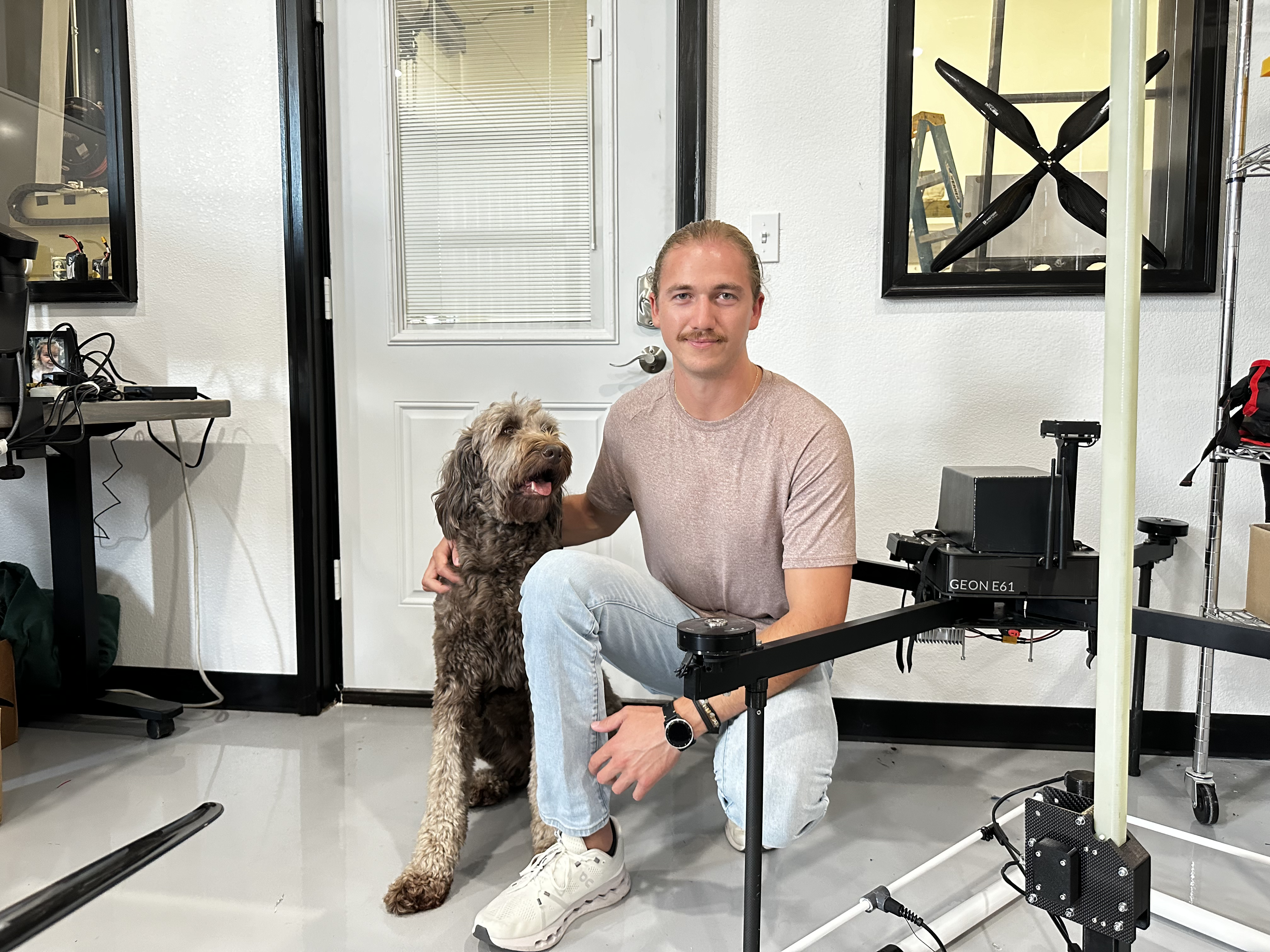
Photo: An instructor guides a student working toward a certificate in Composite Fabrication and Testing at Gulf Coast State College. (GCSC photo)
By Steve Bornhoft
For a four-year term beginning in 1997, Melanie Boyd served as supervisor of elections in Bay County, Florida. Over that time, there were some hairy days, to be sure. The job of preparing precincts for elections and coordinating poll workers is a big one. Boyd was involved in the Gore/Bush recount of 2000 before it was suspended by the U.S. Supreme Court.
But barring the installation of a new voting system, the pace of change at the supervisor’s office was slow. That was then.
Today, Boyd is chair of the Division of Business and Technology at Gulf Coast State College where she started as a business professor in 2008, teaching courses that included “Introduction to Entrepreneurship.” In her current role, she oversees instructional programs tied to technologies that didn’t exist when she started at GCSC: 3-D printing, robotics, unmanned aerial, terrestrial and underwater drones, side-scan sonar.
Institutions of higher learning are not known, generally speaking, for being especially nimble. But in the arena of career and technical education, change, as is said, is the only constant.
Boyd considers it to be her job to ensure that the division she oversees is equipping students with the knowledge and skills they need to qualify for jobs offered by rapidly evolving industries.
“It is important for us to stay in touch with the Bay County Economic Development Alliance, the Chamber of Commerce and everyone who is recruiting people and businesses to this area,” Boyd said. “We need to know who they are bringing in and what their training needs are.”
GCSC, including its Division of Business and Technology, has a close relationship with TechFarms, whose founder and CEO Steve Millaway is a former member of the school’s board of trustees and helped bring about and shape its advanced technology center.
Boyd views GCSC as not just an educational enterprise, but also a change agent, one that can help Northwest Florida, historically reliant on tourism, military installations and public employment, to diversify its economy.
GCSC was instrumental in leading GKN Aerospace to commit to establishing a manufacturing presence in Bay County in 2017. The school agreed to add curriculum to prepare students for employment at GKN. Two years later, however, owing to strategic changes, GKN departed Florida.
In that sequence of events, there were lessons for Boyd and GCSC.
“We don’t want to gear our efforts towards one particular company,” Boyd said. “Hopefully, when we are helping to develop the ecosystem for the NW Florida region, we are addressing broad needs.”
In the case of GKN, GCSC was part of a coalition of entities working to land GKN and was eager to help, given the economic impact and job growth that the company represented. It wound up meeting particular needs of GKN that did not have general application.
Twice each year, Boyd and other GCSC personnel meet face to face with an advisory committee made up of industry representatives. It gives the school a chance to ask about developments in the pipeline and to prepare for them. Too, the school may learn that certain curriculum can be dropped. Informal communication via email between committee members and GCSC takes place throughout the year.
When a need is identified, GCSC may move to meet it by tweaking the syllabus for an existing class, adding a class or launching a new program of study. In the latter instance, accreditation becomes an issue.
“The process of adding a program,” she said, “is a process.”
Too, the campus has its own curriculum review panel. Boyd, who concedes that she may be one of GCSC’s chief disrupters (in a good way), said evaluators sometimes ask her, “Can’t you ever leave anything the same?”
“And I say, ‘No, if I did, I wouldn’t be doing my job.’”
Boyd’s office is located in GCSC’s Charles C. Hilton Center for Advanced Technology and Hospitality Management, an unusual building name that reflects the diverse interests of its namesake and the variety of responsibilities assigned to the chair of the Division of Business and Technology.
“In this division, I have everything from digital media to business, economics, accounting, hospitality, culinary management, engineering, cybersecurity — I have everything that’s not health science or public safety,” Boyd said.
GCSC offers associate’s degree programs, college-credit certificate programs, and non-credit training that speeds student readiness for particular jobs.
Boyd said that her division, Tom P. Haney Technical College and Florida State University Panama City, located directly across the street from GCSC, work cooperatively to ensure that they do not duplicate efforts.
“For example, we have an engineering tech program here where students learn hands-on skills but are not getting the higher-level math that relates to making engineering drawings,” Boyd explained. “If we have a student here who has the desire and ability to handle more advanced curriculum, I’m going to advise him to go into our associate’s degree program and then transfer to the mechanical engineering program at FSU PC. I would be doing the student a disservice if I didn’t do that.”
Boyd noted that the Triumph Gulf Coast board, which is responsible for disbursing settlement monies from the Deepwater Horizon oil disaster, is a huge factor in regional economic diversification. Triumph grants have enabled Boyd’s division to acquire equipment needed for specialized industry training.
A Triumph grant also made possible GCSC’s Tempest program, which deploys mobile command centers and unmanned vehicles in response to natural disasters and other tactical situations. It has fostered cooperation between the school and law enforcement agencies.
The Tempest program figured in response and recovery efforts in Southwest Florida following Hurricane Ian, and has led Boyd to become more familiar with emergency management and homeland security work.
The emergence of a disruptive technology can cause the entire campus and the world beyond to react. Artificial intelligence (AI), whose arrival has been compared to that of the atomic age, provides a good example.
“With all the uproar about AI and ChatGPT, our English department wanted to ban them from campus,” Boyd said. “And I was on the other side of the room saying, ‘Absolutely not, I need to be teaching my computer science students how to work with those programs.’ Just look at your cellphone, your computer, what would you do without them? They were disrupters at one time.
“We may have to set AI guidelines, but they can’t be the same across all divisions.”
The constancy of change notwithstanding, there are aspects of educators’ jobs that are enduring, including the joy they take in student success.
“One of our engineering tech grads just got a job at the Navy base,” Boyd beamed. “She’s doing computer modeling using SOLIDWORKS. We’ve placed students in jobs at Moloney, Inc., a transformer manufacturer that the EDA brought to town recently, and we’ve placed them with companies like Merrick Industries that have been in our area for many years.
“That’s what we’re here for — to train companies’ next employees.”